Looking for the latest information on Introduction To Stack Pointer? We've gathered comprehensive data, records, and insights about Introduction To Stack Pointer.
Core Information
Explore the primary sources for Introduction To Stack Pointer.
Recent Updates
Stay updated on Introduction To Stack Pointer's newest achievements.
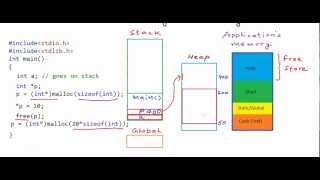
Pointers and dynamic memory - stack vs heap
The Stack and ESP in Assembly Language - What happens when you call a procedure
RISC-V Introduction to Stack & SP - Part I - The Motivation
Understanding the Stack
Stack and Stack Pointer | PUSH and POP instructions in 8085
Ep 080: Data Registers and the Program Counter (Instruction Pointer)
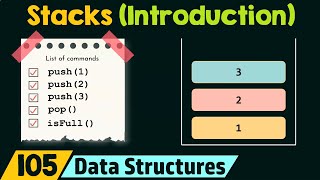
Introduction to Stacks
ISA 2.9 MIPS: Saving and restoring registers to the stack
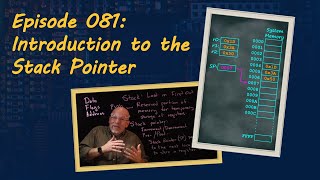
Ep 082: How Functions use the Stack Pointer
What is a Stack Data Structure - An Introduction to Stacks
L-1.17: Register Stack Organisation | Zero Address Instructions | COA
Detailed Analysis
Data is compiled from public records and verified media reports.
Last Updated: September 16, 2026
Final Thoughts
For 2026, Introduction To Stack Pointer remains one of the most searched-for information profiles. Check back for the newest reports.
Disclaimer: Disclaimer: All information is compiled from publicly available data, media reports, and analysis. Actual details may vary.
Summary
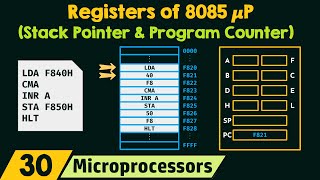
For proper operation, applications require memory beyond that defined by the variables. This temporary memory, called the Part 1 of "How Programs Look in Assembly": youtu.be/2d0gKxGMGbc 00:00 Simple C Program 00:34 The Programming is amazing. Computers allow us to do things that otherwise would be impossible. But sometimes, the code that we ... Microprocessor & Microcontrollers: Registers of 8085 Microprocessor ( This video introduces the concepts and ideas necessary to utilize the This video is part of the Udacity course " There are three main classes of processor registers: data, flag, and address. This video introduces data and address registers, ... Contents: caller, callee, arguments, results, callee-saved, caller-saved, stack growing down, Functions, methods, subroutines, or procedures are blocks of code meant to be called from any location in a higher level of the ...